Many people, from hobbyists to aspiring authors, look for ways to improve their writing style and boost their confidence on the page. The good news is that creative writing is a skill you can develop with the right techniques and a bit of practice.
This guide explores 15 creative writing techniques that can help you improve as a writer. These ideas are easy to try and work for all skill levels.
Jump to:
- Read with Intention
- Practice Freewriting
- Use the Five Senses
- Experiment with Different Perspectives
- Set Yourself Word Limits
- Play with Dialogue
- Try Genre‑Specific Exercises
- Plan Before You Write
- Use Writing Prompts
- Edit with Fresh Eyes
- Join a Writing Group
- Study the 5 Rs of Creative Writing
- Keep a Writing Journal
- Use Visual Prompts
- Play with Structure
- Frequently Asked Questions
- Study Our Creative Writing Diploma for £29
Recommended for you!
Best Sellers







1. Read with Intention
It’s often said that great writers are great readers, but to really improve your creative writing, you need to read with purpose. This means paying attention to an author’s writing style, how they structure sentences, the rhythm of their prose, and the way they build characters or tension.
Try this creative writing exercise:
Choose a short story or novel chapter and underline sentences you find especially engaging. Ask yourself: Why does this work? Is it the word choice, the pacing, or the imagery? Then, try writing a short paragraph inspired by that style.
2. Practice Freewriting
Freewriting is one of the simplest yet most effective creative writing practices. Set a timer for 10-15 minutes, write without stopping, and don’t edit as you go. The aim is to let your ideas flow without worrying about perfection.
Freewriting helps you overcome self-doubt and writer’s block, which are often barriers to improving your writing skills. It’s also a great beginner's writing exercise that encourages you to explore your creativity without judgement.
3. Use the Five Senses
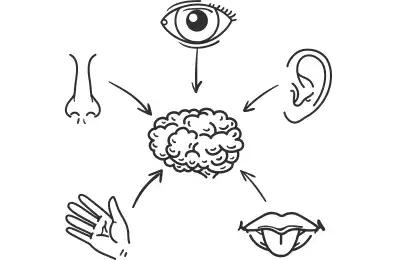
Make your creative writing vivid by engaging the five senses: sight, sound, smell, taste, and touch. This brings your scenes to life and helps readers feel fully immersed.
Creative writing task to try:
Take a setting, such as a busy market or a quiet library, and describe it using all five senses. Avoid stating the obvious; instead, focus on small, telling details.
4. Experiment with Different Perspectives
If you want to improve as a writer, try stepping into different shoes. Write a scene from the perspective of a side character, an unreliable narrator, or even an inanimate object. Changing perspective forces you to think differently about a story and can lead to surprising, original results. It’s also a fantastic creative writing challenge for pushing your creativity further.
5. Set Yourself Word Limits
Limiting yourself can expand your creativity. Giving yourself a maximum word count forces you to be concise and intentional with your language. It’s also a good way to improve your vocabulary, since you’ll need to choose words carefully.
You could reverse the challenge: set a minimum word count and stretch a simple moment into a richly detailed scene.
6. Play with Dialogue

Dialogue is a powerful tool in fiction; it moves the plot forward and keeps readers engaged. To improve writing style, practice writing conversations that sound natural yet purposeful.
Story writing exercise:
Write a scene where two characters want different things but don’t say it directly. Use hints, interruptions, and body language to show what’s really going on.
7. Try Genre-Specific Exercises
Check out our Novel Writing Diploma Course for prompts tailored to various genres. You’ll find structured activities, inspiring challenges, and practical tools to help you grow your skills.
8. Plan Before You Write
Planning can take many forms, from bullet-point lists to detailed outlines. It doesn’t have to be rigid; it’s simply a guide to help you stay on track. Try mapping your story’s events, characters, and themes before you start. This can prevent plot holes and keep your writing focused.
9. Use Writing Prompts

Prompts are small sparks that can ignite big ideas. They’re especially useful if you want to practice regularly but don’t always have inspiration ready. Choose prompts that challenge you: an unusual setting, a line of dialogue, or a ‘what if?’ scenario.
10. Edit with Fresh Eyes
Learning how to improve your writing skills isn’t just about writing more; it’s also about editing better. Step away from your work for a day or two before revising. This makes it easier to spot awkward sentences and plot inconsistencies.
As you edit, ask yourself: Does every sentence serve a purpose? Am I showing rather than telling? Does the pacing match the tone of the story?
11. Join a Writing Group
One of the best creative writing activities involves sharing your work with others and receiving feedback. Writing groups, online or in-person, offer encouragement, accountability, and new perspectives on your work. Peer feedback can highlight both your strengths and areas for improvement. You’ll also learn a lot by reading and critiquing other people’s work.
If you’d like a friendly, supportive space to connect with other writers, join our Facebook Study Group. It’s a welcoming community where you can share your progress and discuss ideas with like‑minded learners.
12. Study the 5 Rs of Creative Writing
The 5 Rs refer to Read, Reflect, Rewrite, Refine, and Repeat. These steps create a loop of continuous improvement:
- Read widely to learn from others.
- Reflect on what works and what doesn’t.
- Rewrite drafts with intention.
- Refine language, pacing, and structure.
- Repeat the process to grow over time.
13. Keep a Writing Journal

A writing journal isn’t just for jotting down story ideas; it can also be a space to explore thoughts, experiment with descriptions, and practice creative writing tasks. Over time, you’ll build a personal library of inspiration you can revisit whenever you need it.
14. Use Visual Prompts
Pictures can be just as inspiring as words. Look at a photo or illustration and write about the scene, characters, and events you imagine. This is an engaging creative writing exercise and a fun way to practice descriptive writing.
When you find a scene in a book, film, or TV show that really works, break it down. How is it structured? Where is the tension? What details make it memorable? This kind of analysis helps you see the mechanics of storytelling, which is key to how to improve writing style.
15. Play with Structure
Stories don’t always have to follow a traditional beginning–middle–end format. Try starting in the middle of the action, writing a story backwards, or using multiple timelines. Structural experiments can add depth and intrigue to your work.
Recommended for you!
Best SellersFrequently Asked Questions
How long does it take to improve creative writing skills?
The length of time it takes to improve your writing skills depends on how often you write, the effort you put into practicing, and your willingness to learn from feedback. Some people notice improvements within a few weeks of regular creative writing exercises, while for others it may take months to feel a real change.
Can creative writing be taught, or is it a natural talent?
While natural talent can give someone a head start, creative writing skills can be developed with practice. Our online courses and structured creative writing tasks can help you refine your style and build confidence in your abilities.
How do I know if my writing is improving?
Signs of progress include clearer expression, more engaging descriptions, stronger character development, and fewer mistakes in grammar and structure. Feedback from others can also help you track your growth.
Is it better to write every day or only when I’m inspired?
Waiting for inspiration can mean long gaps between writing sessions. To improve as a writer, it’s more effective to set a regular schedule, even if it’s just 10-15 minutes a day. Regular practice helps you build momentum and develop discipline.
Where can I find ideas for creative writing if I’m stuck?
Inspiration can come from anywhere: conversations, news headlines, nature, and random objects. Using writing prompts, joining creative writing challenges, and reading widely are excellent ways to spark ideas when you feel blocked.
Do I need formal training to become a writer?
Structured courses like the Creative Writing Diploma Course and the Novel Writing Diploma Course provide expert guidance and feedback to help you reach your goals faster.
Study Our Creative Writing Diploma for £29
If you’re ready to take your writing to the next level, consider the Creative Writing Diploma Course with Centre of Excellence. You’ll explore a wide range of creative writing practices, get expert guidance, and access writing exercises that truly stretch your skills. And right now, you can get the course for a discounted price of £29!