
MysticismDiploma Course




Mysticism has been defined as a union with God, the Divine, or the Absolute. In the Mysticism Diploma Course, we explore mysticism in various religions, the forms it takes, how it is experienced, and how scholars define mysticism.
Course overview:
Certified by CPD
Exclusive access to our study group
Accredited
Learn from desktop, tablet, and mobile
10 modules
Download our learning app
Listen along with every module
Printed and PDF version of course available
Real-time support from our agents
Earn reward points
Accredited CPD courses trusted by
millions worldwide


What Will You Learn?
The Mysticism Diploma Course begins with an introduction to the union with the Divine, religious ecstasies and intuitive insight and enlightenment. From there, we take a look at three Greco-Roman religious mysteries, namely, Eleusinian, Samothracian and Dionysian mysteries, before looking into mysticism in various religions.
We’ll explore the basic definition of mysticism in the context of Christianity and the history of Christian mysticism, focusing on early and Eastern Christianity. The nature and characteristics of Jewish mysticism are discussed, along with the Judaic context of mysticism, the various types of Jewish mysticism and the earlier developmental stages of Jewish mysticism. We’ll dive into the basic concepts of Sufism, the history of Sufism and Sufi practice and thought, and the general nature of Hinduism, the five tensile strands and philosophical texts. We also consider the Sant tradition and the differences between the tradition’s two major strands; Sikhism, its brief history and basic doctrines; and Buddhism, its history, fundamentals and branches.
British academic Robert Charles Zaehner separated mysticism into three main categories, each of which are covered in the course. We’ll learn about theistic mysticism and its basic philosophy; monistic mysticism and how it differs from theistic mysticism; and panenhenic mysticism and how it differs from its monistic and theistic counterparts.
We’ll look into the characteristics of mystical experiences, the possible triggers of non-spontaneous mystical experiences, and examples of mystical experiences based on true stories.
The course concludes with a look at how scholars explain the various types of mysticism; perennialism, contextualism and constructionism; and how spiritual neuroscience views mysticism.
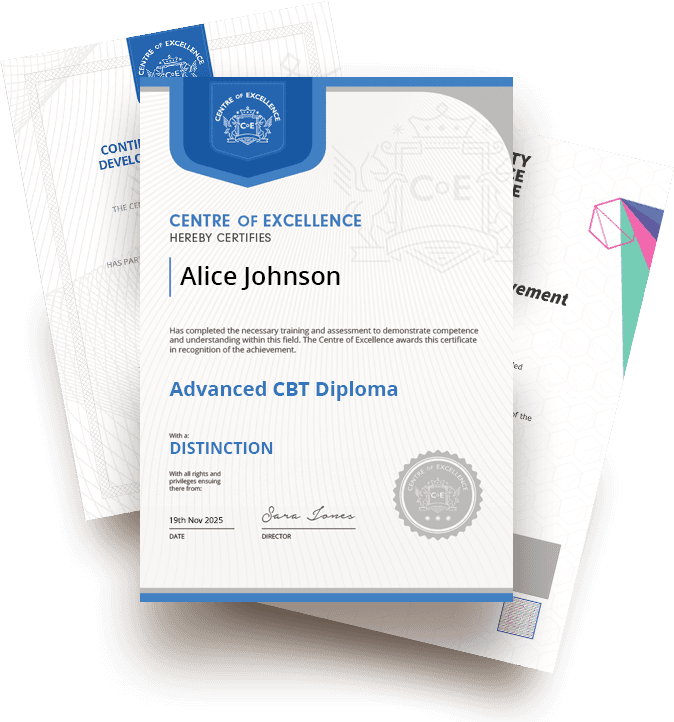
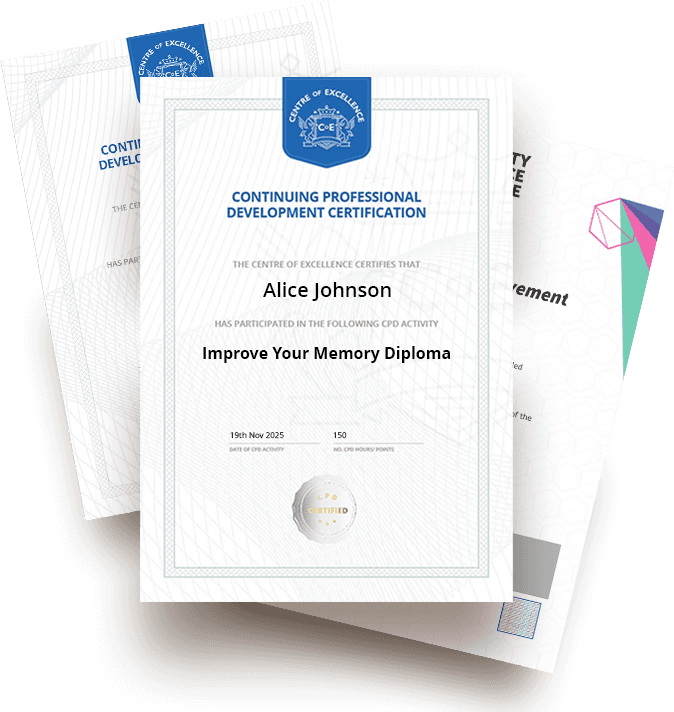
Upon successful completion of the course, you will have the option of printing your CPD accredited certificate.
Who Would Benefit from This Course?
Whether you intend to become a mystic or wish to study the subject from a purely academic point of view, the Mysticism Diploma Course bears light upon this fascinating area - uncovering how connecting with the Divine differs between religions and how the experience manifests.
If you allow it, the course can open up your awareness to other realities that exist around you - allowing you to experience life in a multi-faceted and wonderful way. You can use mysticism to aid your human experience and to understand why you may be struggling, why you may ache to find meaning in your life and even why you may be feeling lost.


Over 2 Million Customers Worldwide
Explore our student success stories to see how Centre of Excellence could change your life
Find out moreEnjoy these Bonus Offers when you Purchase this Course Today!

Bonus #1
Bonus #2
Bonus #3
Accredited CPD courses trusted by millions worldwide

FAQs
How Our Courses Help to Change Lives!
The determination and enthusiasm of our students never ceases to impress us and there is nothing better than seeing our graduates go on to succeed in further education, work, business or just life in general!

“After years of reading and studying diet & nutrition from various sources, I'm glad I finally decided to go for a formal certification”
Marwan
Clinical Weight Loss Coach
Read Testimonial


Charlotte's Story
Charlotte
Sensor Processing Disorder Awareness / Advanced Autism Awareness
Read Testimonial
Lydia's Story
Lydia
Health & Social Care & Children and Young People's Mental Health and Wellness
Read Testimonial
Arune's Story
Arune
Depression Counsellor / Couples and Family Therapy / Relationship Psychology
Read Testimonial
“After years of reading and studying diet & nutrition from various sources, I'm glad I finally decided to go for a formal certification”
Marwan
Clinical Weight Loss Coach
Read TestimonialCharlotte's Story
Charlotte
Sensor Processing Disorder Awareness / Advanced Autism Awareness
Read TestimonialLydia's Story
Lydia
Health & Social Care & Children and Young People's Mental Health and Wellness
Read TestimonialArune's Story
Arune
Depression Counsellor / Couples and Family Therapy / Relationship Psychology
Read Testimonial
Recommended Course Products and Gifts







Discover more hand-picked courses tailored to your learning journey







More Ways To Learn!
With each course you complete, you’re unlocking new opportunities - for your career, your wellbeing, your passions, and more...
And just like you, our platform is always growing! Download the FREE CoE app and continue your learning journey whenever and wherever you are.




Introducing our NEW
Grow Access All Membership
All courses. All audio. One membership.
Get instant access to our full library of courses and audio courses, plus entry to our Member Hub, exclusive benefits and member-only discounts.
Sign up today for our lock-in limited price of just £16.00 per month (billed annually)
Subscribe and Save14 day money back guarantee!
Take the time you need to decide! Start a course today and embark on a 14-day journey through our courses, backed by our money-back guarantee. If you discover the course isn't the right fit for you, our customer support team will ensure a friendly and fast refund process!
Discover our Psychic & Supernatural Blogs