
Personality TestingDiploma Course




Thrive in personal development and professional prosperity with an enhanced understanding of personality testing, enabling you to solve problems using the psychology of personality. While other personality testing courses are statistic-heavy, this course focuses on providing a fundamental understanding of the psychology and philosophy of personality. Important statistical concepts are covered but demonstrated simply, with easily understood diagrams and visual aids, so there is no need to learn statistics.
Course overview:
Certified by CPD
Exclusive access to our study group
Accredited
Learn from desktop, tablet, and mobile
10 modules
Download our learning app
Listen along with every module
Printed and PDF version of course available
Real-time support from our agents
Earn reward points
Accredited CPD courses trusted by
millions worldwide


What Will You Learn?
The course begins with an in-depth explanation of personality tests – the different categories and types of tests, the importance of psychological knowledge, and the use of Eysenck’s Personality Inventory (EPI). We’ll look at how the four classic temperaments have been used to develop both type and trait personality tests and the relation of the two-factor theory to both these temperaments and contemporary personality tests.
You’ll be introduced to the four-letter codes of the Myers Briggs Type Indicator (MBTI), how to interpret them, and how to use temperament function-attitudes to identify the dominant function-attitude of Myers Briggs 16 personality types. We’ll learn how psychological functions relate to learning styles and how Keirsey’s Temperament Sorter identifies four cognitive categories related to these.
We’ll explore the different scales used in personality type and trait tests and the five-factor model (FFM) of personality traits, including how Eysenck’s Personality Inventory relates to it. We’ll also study the mechanics of averaging personality test scores and practice how to interpret the results of a personality trait test for predicting success.
The course outlines how philosophy influenced personality testing, the scientific controversy in measuring character and personality, and major theorists’ ideas about personality testing. It also explains the distinct definitions of temperament, character and personality and how these apply to differences between character types and personality traits.
The course concludes by exploring some of the considerations someone starting a personality consulting practice should make and the practice models they may use, along with providing resources for additional research.
By studying this course, you will:
- Gain an understanding of the psychology and philosophy of personality
- Learn important statistical concepts
- Understand the methodologies used in personality type and trait tests
- Learn how to interpret personality tests
- Understand how a personality consulting practice may be developed
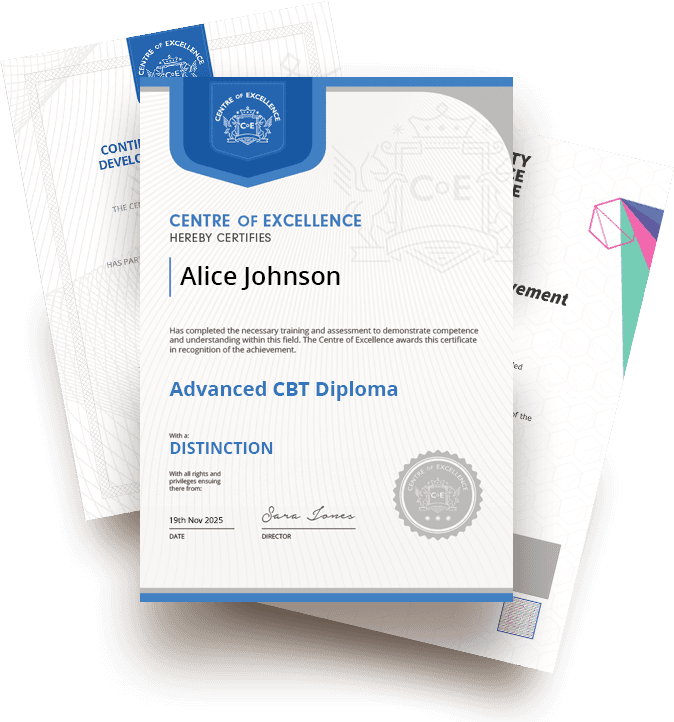
Upon successful completion of the course, you will have the option of printing your CPD accredited certificate.
Who Would Benefit from This Course?
You could be considering developing a personality consulting practice, wishing to use personality testing for self-development or simply interested in knowing more about this field. However you’ve arrived at this course, it will provide you with the fundamental knowledge you need to understand the psychology of personality testing.


Over 2 Million Customers Worldwide
Explore our student success stories to see how Centre of Excellence could change your life
Find out moreEnjoy these Bonus Offers when you Purchase this Course Today!

Bonus #1
Bonus #2
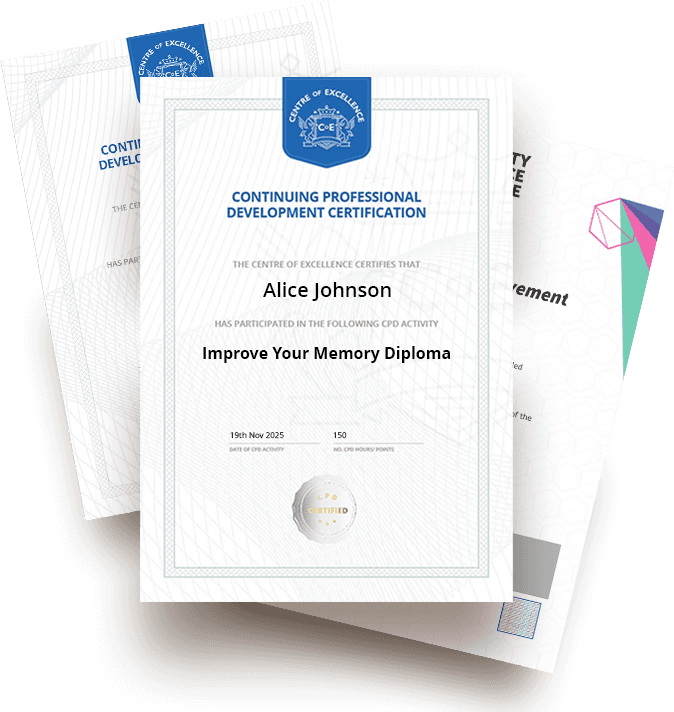
Bonus #3
Accredited CPD courses trusted by millions worldwide


FAQs
How Our Courses Help to Change Lives!
The determination and enthusiasm of our students never ceases to impress us and there is nothing better than seeing our graduates go on to succeed in further education, work, business or just life in general!

“After years of reading and studying diet & nutrition from various sources, I'm glad I finally decided to go for a formal certification”
Marwan
Clinical Weight Loss Coach
Read Testimonial



Charlotte's Story
Charlotte
Sensor Processing Disorder Awareness / Advanced Autism Awareness
Read Testimonial
Lydia's Story
Lydia
Health & Social Care & Children and Young People's Mental Health and Wellness
Read Testimonial

Arune's Story
Arune
Depression Counsellor / Couples and Family Therapy / Relationship Psychology
Read Testimonial
“After years of reading and studying diet & nutrition from various sources, I'm glad I finally decided to go for a formal certification”
Marwan
Clinical Weight Loss Coach
Read TestimonialCharlotte's Story
Charlotte
Sensor Processing Disorder Awareness / Advanced Autism Awareness
Read TestimonialLydia's Story
Lydia
Health & Social Care & Children and Young People's Mental Health and Wellness
Read TestimonialArune's Story
Arune
Depression Counsellor / Couples and Family Therapy / Relationship Psychology
Read TestimonialDiscover more hand-picked courses tailored to your learning journey









More Ways To Learn!
With each course you complete, you’re unlocking new opportunities - for your career, your wellbeing, your passions, and more...
And just like you, our platform is always growing! Download the FREE CoE app and continue your learning journey whenever and wherever you are.





Introducing our NEW
Grow Access All Membership
All courses. All audio. One membership.
Get instant access to our full library of courses and audio courses, plus entry to our Member Hub, exclusive benefits and member-only discounts.
Sign up today for our lock-in limited price of just £16.00 per month (billed annually)
Subscribe and Save14 day money back guarantee!
Take the time you need to decide! Start a course today and embark on a 14-day journey through our courses, backed by our money-back guarantee. If you discover the course isn't the right fit for you, our customer support team will ensure a friendly and fast refund process!